
How Europe’s evolving regulatory landscape and new hyperscale commitments are reshaping where and how data centres will be built
Europe’s data centre market is moving into a new era. As policymakers tighten energy, water and emissions requirements, the biggest developers and hyperscalers are recalibrating where and how they build.
The result is a more selective, policy-driven market where regulation, sustainability and execution capability define which metros become growth hubs.
Importantly, November brought several major announcements that show how quickly this landscape is shifting. These are not isolated investments; they provide a glimpse into the regulatory and sustainability frameworks that investors must now navigate.
Policy as a catalyst: Europe’s three-track model hardens
Governments across Europe are no longer passive observers of digital infrastructure. Their approaches are diverging into three clear models:
- Open-door markets
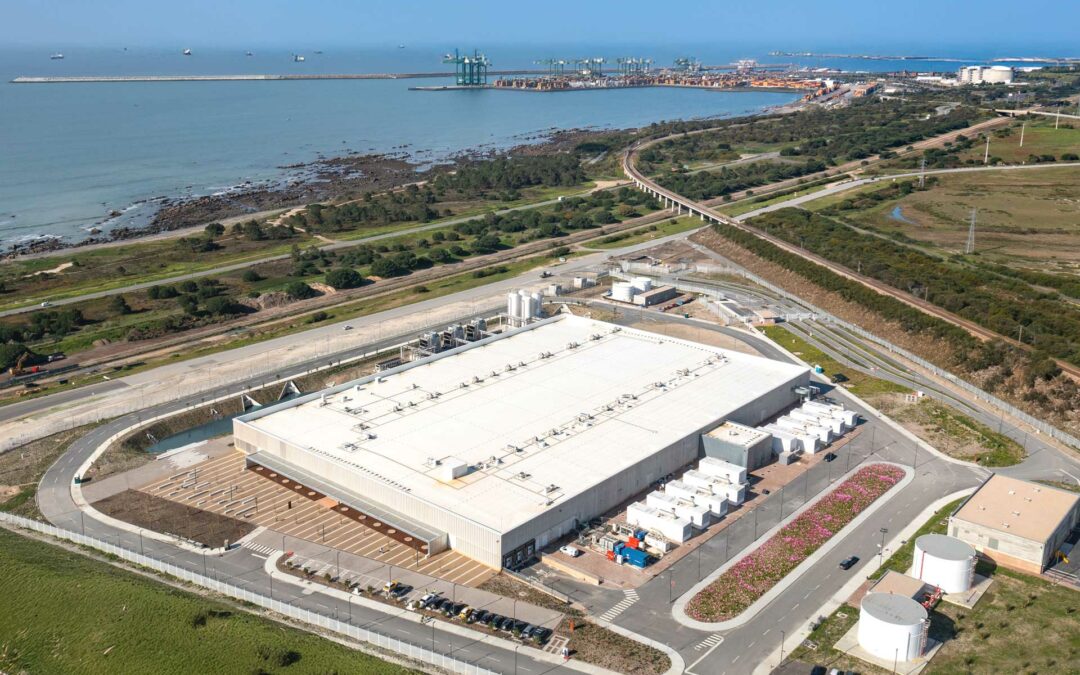
Portugal, Spain, Italy and Greece continue to streamline approvals and promote dedicated digital infrastructure zones. These countries see data centres as economic accelerators, and their policy stance remains supportive – as seen in the rapid political support for Sines’ transformation into an AI hub.
- Managed-access markets
In the Netherlands, Ireland, France and Germany, development is increasingly conditional. Regulators now scrutinise grid impact, water use, heat reuse and renewable sourcing before issuing permits. Germany is the clearest example of this shift: projects can still progress, but only when designed around system-level benefits.
- Resilience-first markets
The Nordics and parts of Eastern Europe are leveraging strong grids, abundant renewables and colder climates to attract long-term capacity. These markets remain attractive for AI inference, high-density compute and redundancy workloads.
Across all three models, one dynamic is constant: policy alignment determines speed-to-market.
Latest developments: clustering and regulation converge
While policy sets the rules, hyperscalers are now reinforcing those rules through capital allocation. November’s announcements reveal a strategic pattern emerging across Europe.
Portugal: ecosystem-building, not one-off investment
Microsoft’s planned $10 billion commitment in Sines marks a structural shift for the Iberian Peninsula.
The partnership with Start Campus and Nscale – and the deployment of 12,600 NVIDIA GPUs – signals that Sines is being positioned as a full-scale AI and cloud ecosystem. This type of investment happens only where policy, sustainability and grid strategy align.
Portugal’s permitting environment and renewable energy credentials make it a model example of how supportive policy can unlock large-scale, energy-intensive developments.
Germany: a tale of two markets
Germany remains central for low-latency enterprise and financial workloads, and the latest investments reinforce that idea. Google’s €5.5 billion programme over the 2026-2029 period, including a new site in Dietzenbach and expansion in Hanau, underscores Frankfurt’s continued role as Europe’s interconnection anchor. But the more interesting shift is occurring beyond Frankfurt.
The Schwarz Group’s new development in Lübbenau, southeast of Berlin, highlights a growing trend: large corporates building sovereign-grade infrastructure that meets stringent ESG and heat reuse expectations.
Berlin–Brandenburg is emerging as a complementary hub – one shaped by heat recovery integration, industrial synergy and diversified power sources. Frankfurt remains the compute gravity centre; Berlin is becoming the platform for scalable, sustainability-led growth.
Sustainability: now the gating factor for development
Sustainability expectations have moved from secondary considerations to primary approvals criteria. Three areas dominate regulatory conversations:
Energy sourcing
European regulators increasingly require new megawatts to be backed by renewable PPAs, on-site generation or hydrogen-ready connections. Markets that lack renewable pathways are seeing slower approvals or more complex negotiations.
Heat reuse integration
Cities including Berlin, Paris, Stockholm and Copenhagen are tightening heat recovery mandates. Developers must design facilities to feed district heating networks – or demonstrate technical infeasibility. Heat reuse has become a key lever for accelerating permits.
Water stewardship
AI workloads drive higher cooling demands, and regulators are sensitive to water scarcity. Projects that rely heavily on evaporative cooling face greater scrutiny. Closed-loop or seawater-based systems are becoming the preferred designs in vulnerable regions.
The result: sustainability is no longer an ESG box-tick, it is a permission to operate.
What this means for data centre developers and investors
The combination of rising sustainability standards, policy divergence and hyperscale clustering is reshaping the data centre investment landscape. Practical implications include:
Permitting expertise as a competitive advantage
Approval timelines increasingly hinge on heat reuse, renewable PPAs and water strategy. Teams that can present credible system-level benefits move faster.
Energy certainty as the primary bottleneck
Securing PPAs or confirmed grid allocation early is now mission-critical, especially as AI demand accelerates renewable procurement across Europe.
Design flexibility as risk mitigation
Facilities must account for potential mid-process regulatory changes. Modular cooling, heat reuse integration and adaptable electrical design reduce exposure.
Risks – and why they matter now more than ever
As investments scale, so do the risks:
Grid congestion
Competing hyperscale projects can saturate local networks, delaying energisation.
Regulatory shifts mid-development
Rules on water, heat reuse and renewables may tighten during construction.
Demand timing uncertainty
AI requirements are growing but fluctuate. Projects without pre-commitments risk slower monetisation.
How to play it
In a more selective, policy-driven market, successful strategies are grounded and disciplined:
- Target zoned, power-aligned sites with clear sustainability pathways.
- Lock energy agreements early- deally renewable-backed and long-term.
- Build local relationships with municipalities, utilities and regulators.
- Design for regulatory expectations from day one, not as retrofits.
The bottom line
Europe’s data centre market isn’t slowing, it’s maturing. Policy, sustainability and hyperscale clustering are reshaping the map, and the latest commitments from Microsoft, Google and Schwarz Group show exactly where the next wave of growth will land.
The teams that combine site readiness, energy visibility and regulatory fluency will define Europe’s next phase of digital infrastructure.
Looking to invest in power-ready land for data centres in Portugal or Southern Europe?
Bravura Investments specialises in sourcing zoned, energy-aligned sites for hyperscale and large-scale data centre development. We help investors navigate permitting, energy strategy and local regulatory dynamics.
Contact us today to explore opportunities across Portugal and Southern Europe.
Don’t miss the latest industry insights – sign up for our newsletter.